

Many business owners are opening Google Analytics this year and seeing something that looks alarming: fewer visits from Google search, and direct traffic behaving strangely. The first worry is usually that something is wrong with the website. In most cases, nothing is. Your customers haven’t stopped looking for you. They’ve started finding you in a new place.
AI search and AI assistants like ChatGPT, Gemini, Claude and Google’s AI Overviews now answer many of the questions that used to send people to a list of links. That is a shift in where your traffic comes from, not a drop in demand for your business.
What’s Actually Happening to Your Traffic
Two things are changing at once. First, more people are asking AI tools for answers and recommendations. Similarweb reports that generative AI sites averaged about 9.5 billion visits a month between June 2025 and May 2026, up 70% from the year before.
Second, when Google shows an AI summary at the top of the results, fewer people click through to a website. In a 2025 Pew Research Center study of nearly 70,000 Google searches, people clicked a regular search result about 8% of the time when an AI summary appeared, compared with about 15% when it didn’t.
Put together, some of the visits that used to arrive as “organic search” now never happen as a click at all: the customer gets the answer, including your business name, right in the AI response. Others still reach your website, but they come from an AI tool instead of a Google results page.
Why Your Analytics Can Make a Shift Look Like a Drop
- Visits move to a new channel. In May 2026, Google Analytics added an “AI Assistant” channel for visits from tools like ChatGPT, Gemini and Claude. Visits that once counted as organic search can now show up there instead.
- Some AI visits show up as “direct.” When someone taps a link inside an AI app or copies a link from an AI answer, the visit often arrives without any source information. Google Analytics then counts it as direct traffic, even though AI sent it.
- Answers replace some clicks. A customer who reads your hours, services and reviews in an AI answer may call you or visit your location without ever opening your website.
- The visitors who do click are further along. Someone who arrives from an AI recommendation has usually already been told you’re a good fit. Fewer visits can still mean the same or more customers.
How to Tell a Shift From a Real Problem
Sessions alone don’t tell the story. Look at these together:
- Leads, calls and sales. If form submissions, phone calls and revenue are steady or growing while sessions dip, your marketing is working. The path customers take has changed.
- Search Console impressions. If your impressions in Google Search Console are steady or rising while clicks fall, Google is still showing your business. More of those searches are simply being answered on the results page.
- The AI Assistant and Referral channels. Check whether traffic from AI tools is growing as organic search eases.
- Google Business Profile actions. Calls, direction requests and website clicks from your profile often rise as customers make decisions without visiting your site first.
A real problem looks different: impressions falling along with clicks, important pages dropping out of Google’s index, website errors, or leads and calls declining across every channel. Those are signs to investigate your website right away.
What to Do About It
- Measure what matters. Judge your marketing by leads, calls and revenue, and track every channel, including AI.
- Make sure AI recommends you. The businesses AI tools name are the ones with clear answers on their websites, consistent listings and a steady stream of genuine reviews. Our article on what AI search optimization is explains how it works.
- Keep your website strong. AI tools read your website to decide what to say about you, and the customers they send still land there. Your site matters as much as ever.
How Osky Blue Helps
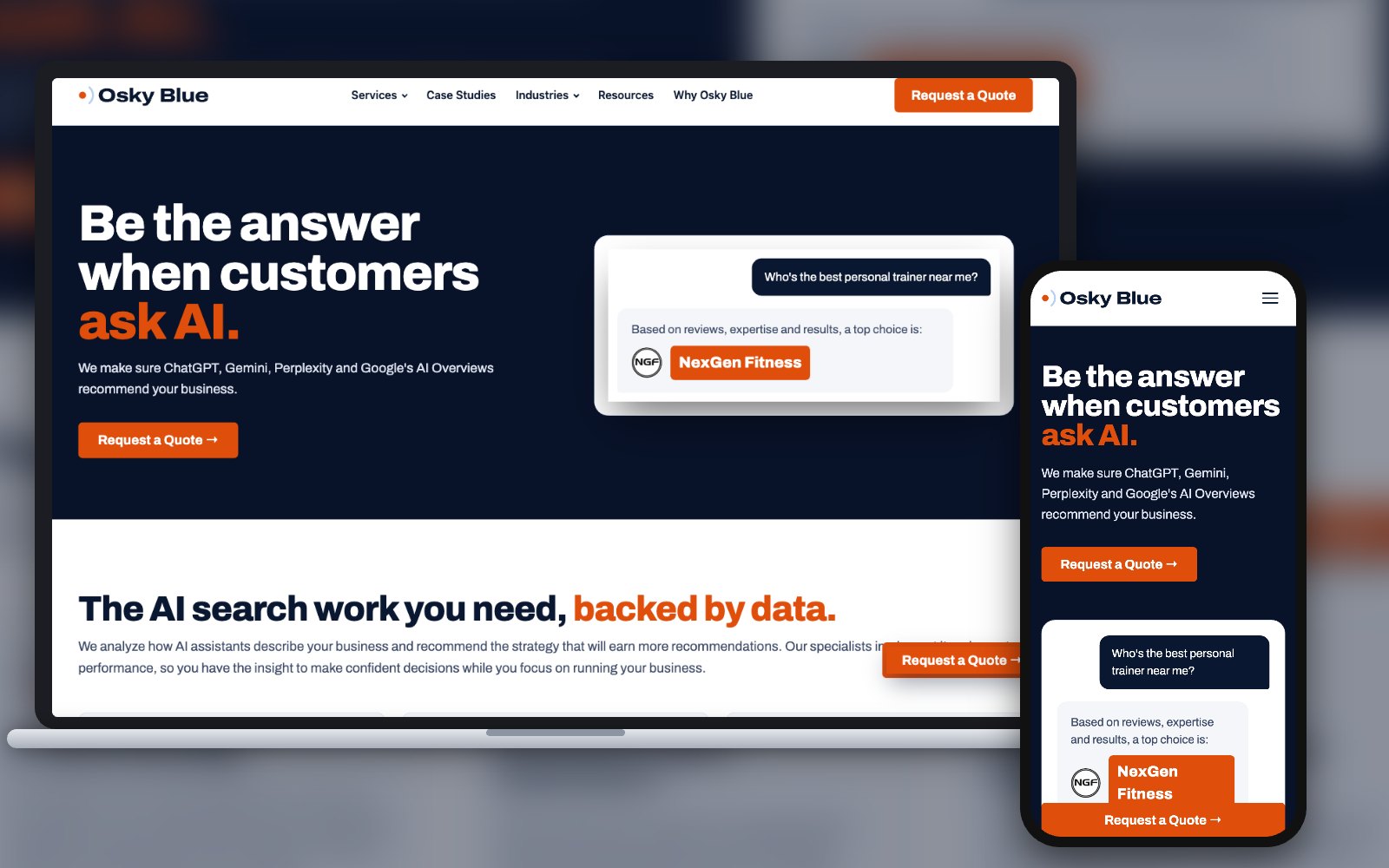
We analyze your traffic, leads and visibility across Google and AI tools to separate a shift in traffic from a real problem, then recommend the strategy that keeps customers finding you wherever they search. Our specialists implement it, from SEO to AI search optimization, and every client has a reporting dashboard that shows performance by channel, including AI, so you have the insight to make confident decisions while you focus on running your business.
Seeing changes in your analytics and want a clear answer? Request a quote and we’ll take a look.